Mornings at the Temple

A story from my time living on the farm in Chitwan.

IMG_1054

The local temple for the community of Bhagauli

The air is cool, and the surrounding fields are concealed by thick fog. It’s a typical morning in the southern Terai Plains of Nepal. I clutch a tin mug of steaming hot masala chiya, still waking up. Anjana, my host mom, is running around making preparations to go to the temple. Today is the first of a 15-day rotation to give puja (worship) at the community temple. All women from the twenty households take turns performing temple duty (unless they are on their period in which case they aren’t allowed to enter the temple). At sunrise they give offerings and clean the temple, and at sunset they give a shorter puja.

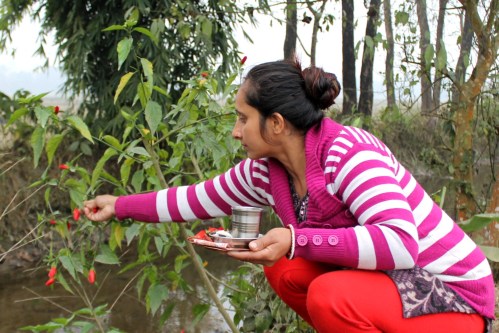
As I lazily sip my tea, Anjana is busy. She cleanses herself using water heated on the stove then organizes her supplies: a copper plate with red & yellow paint, a gold flask holding water, and a small bowl of coconut pieces. All of these are offerings to the gods. Along the short walk to the temple, we collect more: red & purple flowers growing along the creek and young grass chutes from the field.
IMG_1051

Anjana collecting red flowers for puja

Once we arrive at the temple, we take off our shoes and touch our foreheads to the foundation of the temple. Anjana unlocks the door and turns on a large speaker which broadcasts Nepali music. This is call to the neighborhood children who wander to the temple. I dance along with the music, twirling and weaving my hands back and forth in an attempt at traditional Nepali dance. The children watch with shy smiles.

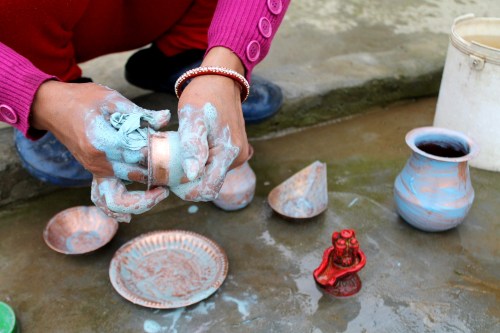
Anjana begins to clean and arrange her supplies. She hands me a broom & mop, and I set to work cleaning the surrounding area. I sweep clockwise around the temple, making sure to always keep the building on my right side. I then move on to the large shelter area, moving around fountain, cow statue, fire pit, medicine plant, and spiral candle stand. It’s menial work, but I’m happy to have a role in morning puja.
IMG_1052

Cleaning the worship objects

After the cleaning is finished, I grab a stool and quietly sit behind Anjana in the temple. A statue of two gods smile down at me. I am told they are Shiva and Parvati, the parents of Ganesh, The Remover of Obstacles and God of New Beginnings. This temple pays tribute to this trio of gods. One village over, they may have different patron gods. Hinduism teaches that God is in everything and all the gods are actually different manifestations of one god. With this faith, there can be countless Hindu gods, as infinite as stars in the sky.

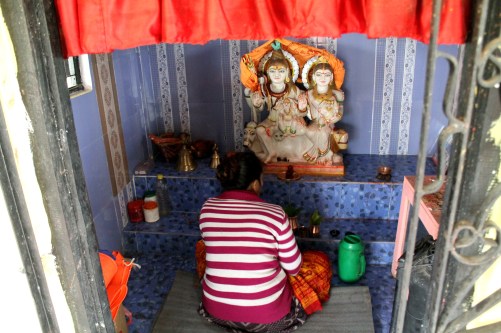
Anjana sings quietly as she cleans the statues and lays offerings at their feet. She lights an oil lamp and incense before backing out of the temple, never turning her back on the gods. Above the door she pours water from her gold flask to cleanse the surface. Then she places a dab of yellow & red paint on the frame along flowers, grass, and coconut. She repeats this process many times; over the fountain, at the cow statue, on the bells, beneath the medicine plant, in the fire pit, and finally she places her oil lamp in the spiral stand. She says a mantra and sends her prayers up to the sun.
IMG_1063

Giving offerings to Shiva & Parvati inside the temple

Anjana turns to me and gives me the final blessing, along with any children who have wandered to the temple. I receive tikka on my forehead, a flower in my hair, and a piece of coconut. Namaste, she says to me. The god in me honors the god in youDhanyabad, I say back. Thank you.

Religions can be beautiful. Hinduism is no exception. Sometimes we are so focused on our own paths that we miss the beauty in the paths running parallel to ours. All the paths are leading to the same place. It’s okay to take a detour.
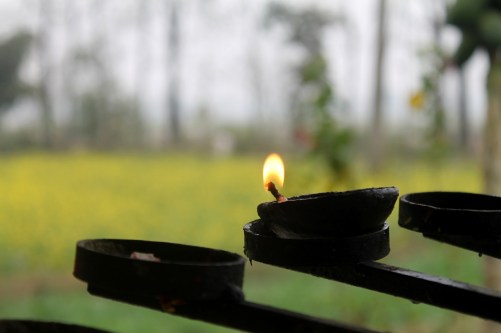
IMG_1085

An oil lamp burning outside the temple, an offering to the sun


Touristical

DCIM100GOPROGOPR1585.

A perfect day for seeing the sights in Pokhara

Over the past two weeks I’ve explored a part of Nepal I’d only seen in guidebooks… The tourist districts: Thamel in Kathmandu and Lakeside in Pokhara. If you ever travel to Nepal and want an authentic experience, avoid these areas like the plague. Because that’s exactly what you will find here. A plague of tourists moving between shops, a plague of vendors selling overpriced souvenirs, and a plague of restaurants offering sub-par pizza.

That’s not to say I didn’t enjoy my time in Lakeside or Thamel. I spent nearly a week on the outskirts of Lakeside when I returned from Balamchaur. It was a 180 flip from the quiet rural village life. Lakeside was crammed with European restaurants, bars, bakeries, spas, and all sorts of other temptations. Men with dark complexions wearing flip-flops sold fresh squeezed fruit juice from the back of their bikes. Women with baskets on their backs walked up & down the sidewalks wearily calling, “oranges…fresh oranges…oranges”. Live bands played inside dimly lit bars, and 90’s throwbacks floated through the cool night air. But take a step outside the main road and you’ll find that Pokhara is quite beautiful.

My first full day in Pokhara I was invited to tour the city on the back of a motor bike. I was eating breakfast when a fellow traveler asked me if I wanted join in some sightseeing. His name was Tim and he was from Germany. Other than that, I knew nothing about him. I paused ready to make up some excuse about why I couldn’t go. Then I realized that I actually wanted to join this complete stranger exploring this completely strange city. So after breakfast I grabbed a jacket and hopped on back of his rental bike.

DCIM100GOPROGOPR1587.

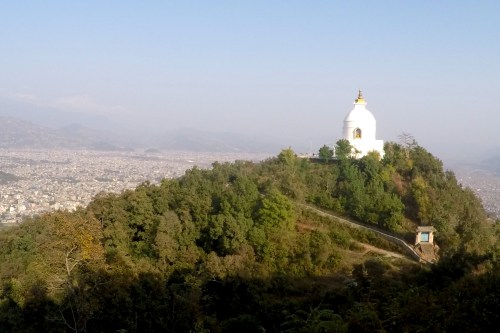
The World Peace Pagoda keeping watch over Pokhara

Along with another couple, we rode up to the World Peace Pagoda for an incredible view of the Himalayas on an unusually clear day. There was a scenic cafe at the top where we stopped for tea and got to know each other. It wasn’t until then that I even knew the other couple’s names, Bailey & Bailey (easy to remember)! We swung back through town for a cheap veggie burger then rode on to explore a couple caves just outside the city. It crossed my mind a few times how bizarre the outing was. We had met this morning, but now were acting like old college friends. But that’s the nature of travel; when you meet people who share your language and a similar background, you connect instantly. They’re a small piece of home away from home.

This situation would repeat itself in the following days. I went out for pizza at a restaurant overlooking Lake Phewa with a woman from Scottland. She had been in the outdoor crowd in college and we exchanged adventure stories. The next day I went out again with a guy that had just recently arrived in Nepal and shared the advice I’d gleaned from my past five months here. On a walk along the shore of the lake I ran into an older spiritual man who educated me on the energies of the universe and finding purpose in the current life. The name he’d been assigned was Chris, but he had chosen the name Satya, meaning Truth. Needless to say, it was a memorable conversation.

Like Lakeside, Thamel brought me back to Western comforts of brightly lit cafes. Here I could open my laptop and have the world at my fingertips. I spent much of my time drinking peppermint tea and indulging on baked goods (ovens are non-existent in rural Nepal). When I escaped the clutches of Western luxury and ventured out into real Kathmandu I remembered that I was in Nepal.

I caught a micro-bus South, across the Bagmati River to Patan. It’s only a 15 minute ride, but it’s a world away from the Western facade of Thamel or the crowded streets of Kanti Path, the road that bisects central Kathmandu. Patan is not only a completely separate place, but seems to exist in a different time. The streets are worn stone, inscribed with Sanskrit mantras now reduced to faint ridges. Around every corner of the narrow streets is a temple or some other piece of history that dozens of locals walk by everyday without a second glance.

DSC02857

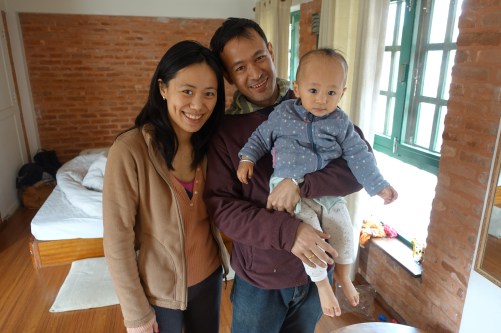
My yoga instructor and his sweet little family

On this specific trip to Patan I went to visit Rupesh, my former yoga instructor who I spent a month practicing with while I was in the Dragons semester program. He lives on the third floor in a small studio apartment near the historic Durbar Square. On my way up to his apartment we bought some jalebi, a popular Nepali sweet, from his neighbors on the first floor. Upstairs I met his wife and 1-year-old daughter. We shared milk tea and got to know Rupesh as not just a yoga instructor, but also a caring husband and a loving father.

During my week in Kathmandu, I reconnected with many people I had met my first few months in Nepal. I had dal bhat with my Kathmandu host family. We played a couple rounds of cards and I brought ingredients to make peanut butter bars (a weekend tradition I started during the month I lived with them). I caught up with one of my instructors over tea and met my language teacher at the Kathmandu mall. By coincidence, I ran into another one of the staff at Dragons walking by on the street and we chatted for a bit. With each encounter, I said goodbye feeling energized and happy. I officially have friends in Nepal.

IMG_1205

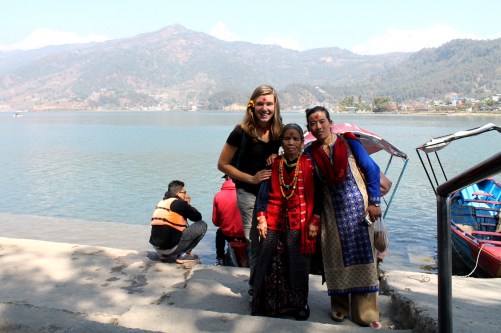
Me, Pupu, and Didi visiting Tal Barahi Pagoda, a temple on Phewa Lake only accessible by boat

Something About the Mountains

IMG_9735

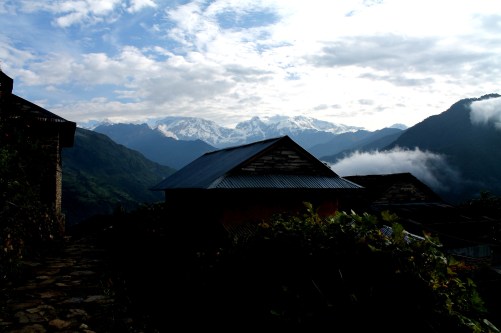
There’s something about the mountains
The way they stand firm and proud, roots down deep
How the sun hits them at first light and lingers on them in the evening
It seems like they’ve always been there and always will be

There’s something about the valleys
The way the river cuts through them forming a crease between hills
How life seems to grow and spread from the river banks
Interlaced paths prove every road leads to home

There’s something about the people
The way they walk the paths each day to the fields and back again
How they always have time to stop for a cup of tea along the way
Strong hands crusted with fertile soil and wrinkles that ripple across their face
like streams flowing through the valley

There’s something about the mountains.

Return to Balamchaur

IMG_1130

February in Balamchaur

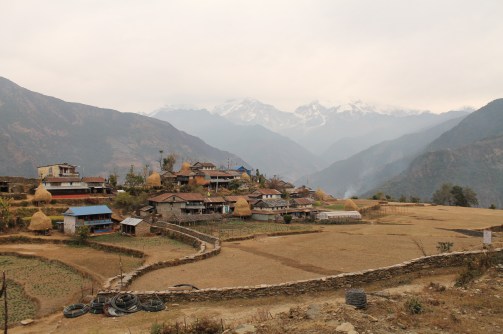
I was nervous to return. I had visited Balamchaur five months earlier and fell in love with this rural Gurung village nestled in the shadow of the Mansiri Range. There was something magical about it; a quaint village tucked away in the hills with the massive Himalayas keeping constant watch. My arrival in September had aligned perfectly with the Dashain festival, fifteen days filled with extended family, feasting, and dance (a typical celebration here in Nepal). It was an exciting time to be in the village and my first real taste of Nepali culture. When I left the village after ten days, I told my ama and didi (host mom and sister) that I would try to return, but I couldn’t make any promises. I had tears in my eyes as I hiked down the hill, away from the mountains and away from Balamchaur.

Returning to a rural village isn’t easy. Communication is difficult not only because of the lack of internet connection, but also because of the language barrier. Even if you are able to communicate, transportation can be an issue with places only accessible by jeep or hiking. However, I had Becca. With a stroke of good fortune, I had met Becca near the end of my stay in Balamchaur. She was a Peace Corps volunteer just starting a two-year stint in the Lamjung area working on a food security project. We soon discovered we were both Midwesterners (she from Iowa and I from Wisconsin). We connected right away!

When Becca found out I would be staying in Nepal until May, she invited me back to the village and gave me her contact information. I made plans to return in early February and she helped me with everything: contacting my original homestay family, instructing me on which permits I would need, and connecting me with the local jeep driver. Returning to Balamchaur wouldn’t have been possible without her.

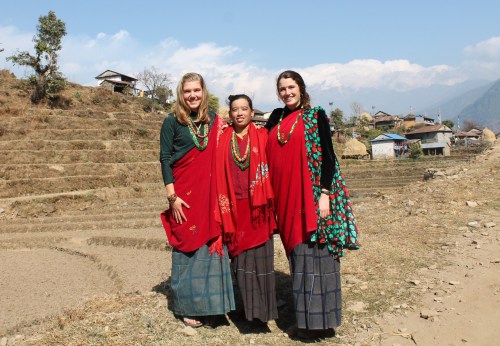
img_1169-e1518762762590.jpg

Becca, Didi, and I in traditional Gurung dress on our way to a school celebration

I planned to return the first week of February and stay for a couple weeks. I went to Pokhara to extend my visa, get a permit for the Annapurna Conservation Area, and mail a few letters home. I didn’t see much of Pokhara, the most popular tourist city in Nepal. I was eager to return to Balamchaur. I imagined hiking up the hills to catch sunrise over the Himalayas and sitting out at night watching the stars. I imagined walking down the stone path into the village and seeing familiar faces. I was especially excited to see my ama who had been a gracious host and the definition of a strong, resilient Nepali woman. I imagined a homecoming.

But as I bounced up the dirt road in a jeep bound for Balamchaur, I was second guessing my decision to return. Back in September, Nepal had been exotic and new. There had been a celebration going on and the village was alive. I had a group of fellow travelers to share the experience with. What if the village wasn’t as I thought it was? What if things had changed? What if I had changed?

However, two hours later as I sat cross-legged on the mud floor of my ama’s kitchen drinking sweet masala tea and conversing in broken Nepali, I knew I’d made the right decision.

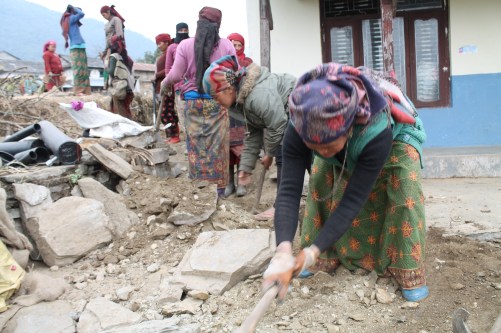
Of course, things had changed. Time doesn’t stop when you leave a place. First of all, the colors were different. Being winter, the mountains were painted with an extra coat of white snow. The formerly green rice paddies were now a dusty brown, soon to be plowed and planted with corn. A new water project was in progress and pieces of the village were dug up to make room for the network of pipes that would bring clean spring water to every household in the community. When I had arrived in Balamchaur, my ama had been digging a ditch for the new pipe. She wore her hair in a tight braid and carried a shovel. It matched my image of her perfectly.

IMG_1112

My ama digging a trench for the new water pipe

The village was quieter this time of year. Extended family had returned to work in the city and the children were in school. I had told Becca that I was fine hanging around the village and exploring the valley. I had brought my journal, some postcards, and a few books. I would have plenty to do. However, being the excellent host that she is, Becca had found some things for us to do during my time in Balamchaur. There were a couple weddings and a week-long school celebration going on in the community. She also proposed an overnight hike to the famous Gurung village of Ghalegaun and a mural project at the school. I was game for anything and everything!

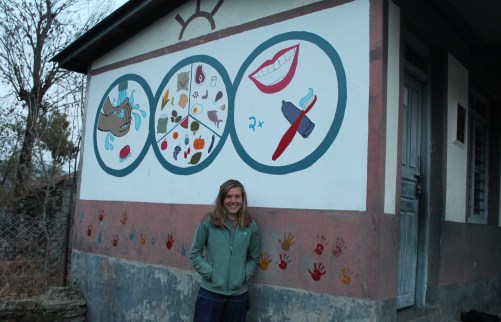
Two weeks flew by. I followed Becca up and down the valley, watching her give lessons on growing mushrooms and planting fruit trees. We gave lessons on hygiene and healthy eating at the local primary school and painted a big mural that summarized what we’d taught. We ate dal bhat masu (rice & lentils with meat) at a wedding in a neighboring village and hiked down into the valley to another wedding for another round of dal bhat masu. We danced to Nepali folk songs, pop songs, and even grooved to an American song (Hey Ya, by Outkast, if you’re wondering). We did a sunset hike to Ghalegaun and explored the famous village the following day, stopping for local tea and real coffee (surprisingly hard to find in a climate perfect for growing coffee).

IMG_1189

The completed mural, finished just before dark on my last day

Despite all our travel throughout the valley, I still spent plenty of time enjoying village life and time with my family. I ate my morning and evening dal bhat with my ama and shared a room upstairs with my didi. During my free time, I would walk around the terraced fields and up past the school to a beautiful spot overlooking the mountains that I remembered from last time. In the village, I visited nearly all of the roughly twenty households and had more cups of tea than I could count. I brought them pictures that we had taken in September and they gave me letters to be delivered to the students they hosted. They asked me when the students would return to Nepal. Maybe after they finish university, I said optimistically, knowing well that it would be difficult if not near impossible for any of the other students to return.

IMG_1136

Delivering pictures to our homestay families

It was surprisingly easy to leave Balamchaur this time around. Maybe I’ve grown accustomed to goodbyes. Or maybe now I’ve proved that goodbyes aren’t always permanent.


Saying Goodbye

26855299_1716190588432396_2096762527_o

This morning I said goodbye to Chitwan and goodbye to the Adhikari Family. Tara & Anjana woke up with me at 4:45am to see me off. I would be catching the 5:20am bus to Pokhara that morning to begin the next chapter of my journey. Anjana quickly warmed some buffalo milk (one of my favorites!) and made some fresh roti with ghee for my travels. I told her she didn’t have to, but she said she did. I am a mother, it’s my job, she told me. I smiled and didn’t argue.

In typical Nepali fashion, we were running late. I quickly downed my hot milk and packed the roti into my backpack for a snack on the bus. While Tara was finishing his tea, I slipped back into the family room where I’d slept my last night. I whispered a goodbye to Aakriti and Ananta, gently placing my hand on their heads. Ananta’s eyes fluttered open and he smiled, mumbling a goodbye back to me. Aakriti got up and gave me a hug. I told her when I came back we would dance some more. She agreed.

I heard the motor bike start and I rushed out the door. I slung my backpack over my shoulder and hoisted my duffel onto my lap. With a hug and kiss from Anjana, we raced off to catch the 5:20am bus in Chanauli, a ten minute ride away. It was 5:15am. The morning was dark and very foggy, classic conditions in Chitwan. It is difficult driving, Tara said, stating the obvious. The rhinos will be returning back to the jungle now. Rhinos?! I had been worried about catching my bus, but now I was just concerned about surviving the ten minute ride to the bus stop. We sped through the fog and I gripped onto my duffel, wondering how I would fare a collision with a rhino. Not well, I concluded.

Miraculously, we made it to Chanaouli in one piece and I arrived a good ten minutes before the bus. Luckily, the bus runs on Nepali time! I said my final goodbye to Tara, who had been an incredible host and teacher during my time in Chitwan. He gave me a stiff hug (not a common gesture in Nepal) and a firm handshake. With that, I got onto the bus and watched him disappear into the mist. Hopefully, not forever.

This is one of many goodbyes I’ve said since leaving the U.S. and coming to Nepal. I’m getting better at it, but I can’t say I enjoy it. I always want it to be meaningful. I want to say something deep and impacting, something that expresses how grateful I am that our paths crossed. Usually, Thank You, the only thing that comes out. But maybe that simple phrase expresses exactly what I feel. Maybe Thank You is enough.

Work as Usual

When I imagined working on an organic farm in Nepal, I imagined long hours in the garden planting seeds and pulling weeds. While I did a bit of both, I hadn’t imagined the variety of tasks that would change daily during my time on the farm. Here are a few of my favorites!

The Buffalo Ladies

IMG_0826

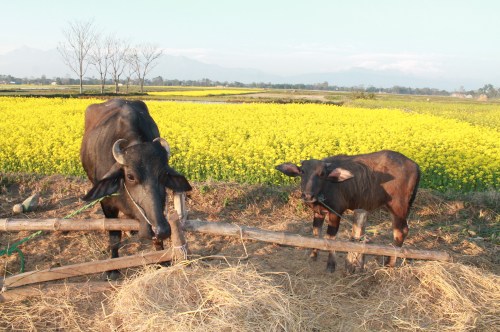
Meet Beatrix (Mrs. Buffalo) and Freddy (Miss Buffalo). As you can tell from the picture, it is a bitter cold winter here in Chitwan, so the buffalo ladies require extra care this time of year. Each morning and evening they receive food warmed over the fire. Beatrix gets boiled cornmeal with rice flour, mustard greens, and salt for added flavor. If she rejects this, we add more rice flour until it meets her high standards. Freddy is easier to please. She gets a nice mix of boiled cornmeal with wheat flour which she happily slurps up as soon as you put the bowl in front of her. Once finished with their entrées, they receive a generous portion of hay which (according to Tara) keeps them warm.

Either before or after their meal, the milking is done. Freddy gets the first go at the milk before Tara takes over. He washes the udder, dabs on some oil, then sets his hands to work. He is a professional. In no time at all, he has a full pail of milk (~1.5 liter), ready to be boiled over the fire.

IMG_0961

Around noon when the fog lifts and the sun comes out, the ladies go out to the pasture. Taking them out the the pasture is no easy task, especially when it comes to Freddy. It wasn’t until my last month on the farm that I worked up the courage to take her on the 100 feet journey to the field. She goes slowly at first and has to be lightly prodded, but once she sees the field, she takes off. Imagine 250 pounds of baby buffalo making a beeline for the vegetable patch with you as the only anchor point. It’s a bit of an adrenaline rush to say the least.

Once in the field comes another round of hay before we muck the stalls. A couple times a week we go out to the field with baskets and sickles to collect grass for the buffalo ladies. Both love grass and it’s always a treat. Freddy kicks up her hind legs and huffs happily when we dump the grass in front of her. Beatrix, being the diva that she is, grunts angrily as if to say, that’s all you brought?

They are high maintenance, but the buffalo milk, paneer (cheese), and ghee (something better than butter) make it all worthwhile!

Climbing the Bean Tree

IMG_0963

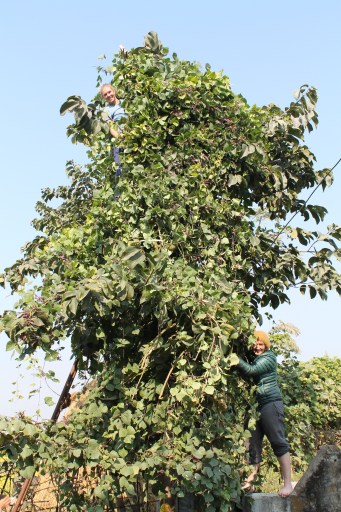
For the last month we’ve been harvesting simi beans from the vine that goes up the tree just outside the buffalo pen. I quickly gained a reputation as a good tree climber and scaled the tree at least once a week in search of ripe beans. I figured out the best branches and the spots where the beans grew the thickest. I would fill every pocket (and sometimes my sports bra) with beans before throwing the rest down to where someone would wait with a bucket. Although it made Anjana & Tara nervous, I loved scaling high into the tree! I never worried about falling until after I was safely on the ground. Harvesting beans was my all-time favorite chore. As an added bonus, that night we would have curried green beans which is my all-time favorite vegetable!

Grinding the Dahl

IMG_0870

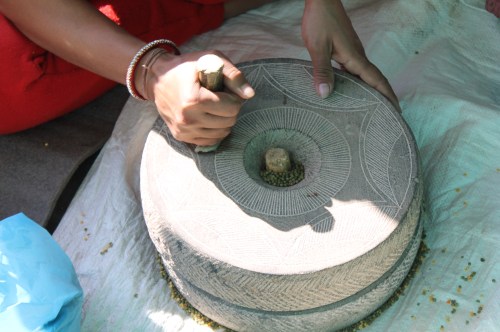
When you eat dahl bhat (rice & lentils) every day, you end up going through a lot of lentils! In order to cook quickly, therefore using less gas, the lentils need to be ground. Every three weeks or so, we would venture over to the neighbors with a few kilograms of whole beans. The neighbors own a grinding stone, built right into their front porch. It often became a social event with many local women gathering around to chatter in fast Nepali while we turned the grinding stone that split the lentils. For me, it became a great arm workout… but only for my right arm.

Working in the Garden

IMG_0868

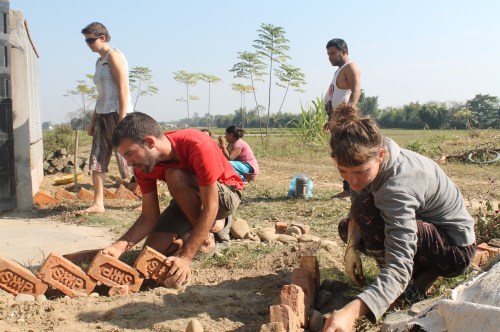
Although the Adhikari’s live on a farm, they don’t farm for a living. Like many of their neighbors, their gardens only sustain their family (and volunteers). We would occasionally pull weeds and plant seasonal vegetables like lettuce and cauliflower, but it wasn’t the focus of our work on the farm. We actually spent more time working in Anjana’s flower gardens than in the veggie patch. We built a front garden and later a garden along the fence that we made out of recycled plastic bottles. Slowly, the gardens begin to fill with plants Anjana bought, found, or received from friends. Over the course of two months I watched the front yard turn from a patch of dirt to a little flower garden, created by volunteers, nourished by the sun, and cared for by Anjana.

The Fish Pond

IMG_0977

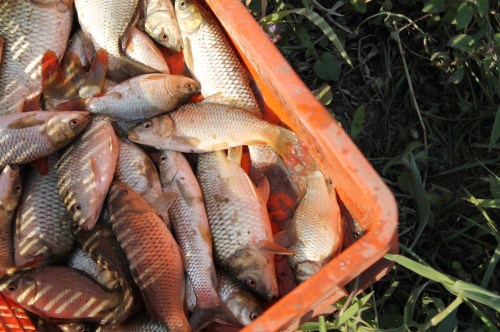
The fish were low maintenance. They resided in the small pond across the dirt road from the house. Sometime Tara would run to the local butcher to get chicken entrails (to my surprise, the fish were carnivorous), but aside from that, they were self-sufficient. Then there came the day of the great fish harvest, two weeks after the great honey harvest! There was a Hindu holiday (one of many) and people celebrated by eating fish for this particular holiday.

The day of the harvest we were over at the neighbor’s house early to get the generator pump that would drain the pond. After five hours the pond was drained enough for Tara and another neighbor to go out and start netting fish. Our job as volunteers was to wade into to mucky water and corral the fish toward the net. The mud seeped up over our ankles and we had to keep moving to prevent getting stuck. All the while, a crowd gathered around the pond to watch to whole process. Neighbors came and went with bags full of fish to take home and fry up for dinner.

Once we had collected a sufficient number of fish for the village and the family, we went inside for a marvelous fish feast. Every part was delicious, from head to tail! After dinner, we got to work scraping and gutting the fish. My job was snapping back the head and removing the gills. Prior to that day, touching fish had made me a bit squeamish. I can proudly say that after the great fish harvest, fish are no longer a problem for me!

Drinking Tea

IMG_0854

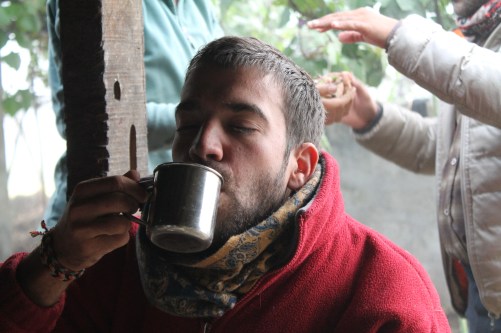
Once all our work is done, we drink masala tea. The perfect start and end to every day on the farm in Nepal!

The Great Honey Harvest

Processed with VSCO with m5 preset

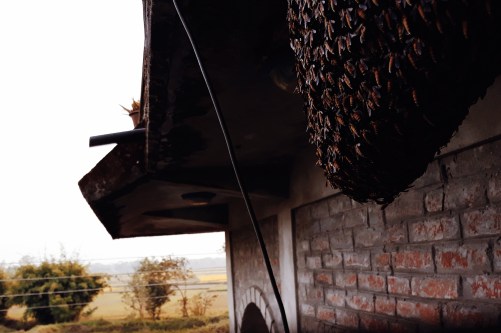
The bee hive pre-harvest, covered in hundreds of bees

It was your average Friday night: I was sitting on the kitchen floor with Anjana and the other four volunteers, tearing apart dried greens (gundruk) to store in containers. It was around 8:00pm and I was about ready to call it a night. We were just packing the last container when Tara burst into the kitchen and announced that tonight we would harvest the wild honey. We were taken by surprise. We knew that Tara had been planning to collect honey from the huge hive hanging off the side of the house, but we thought it was happening the next night. We asked why the plan had changed. Tara simply said that Saturday night was a bad time to collect honey. The right time was now.

Upon Tara’s instructions, we got fully clad in our honey hunting attire: sneakers, long pants, jackets, scarves, and optional gloves & glasses. Tara told us that one or two bee stings was alright, even healthy. But three stings? “Maybe we go to hospital,” had been his exact words. That was all we needed to hear. We dressed for a blizzard.

All the lights in the house were shut off so they wouldn’t attract the bees. We made our way by flashlight to the second floor balcony. The five of us volunteers watched transfixed as Tara, Anjana, and Anjana’s father (visiting from a neighboring village) prepared to collect the honey, wearing their everyday clothes.

IMG_0600

Anjana’s father smoking out the bees

Anjana’s father climbed up onto a ladder carrying an old t-shirt that had been turned into a torch. He held up the smoking rag to the hive and the blizzard began. But it wasn’t snow. Ohhh, no. Like something straight out of a thriller movie, it was a blizzard of bees. The rest of the volunteers and I stayed in a tight pack, our scarves tightly wrapped around our faces. I could feel the bees hitting my jacket and the occasional bee bouncing off my face. I pulled my scarf up over my face. As for the honey harvesters, they were unfazed.

Once the most of the bees had fled, they cut down the hive, making sure to leave the base so the bees could rebuild. The hive was gently placed in a large metal bowl and quickly brought downstairs before too many bees had the opportunity to return. Safely in the yard, Anjana set to work cleaning the hive. She nimbly plucked off bees with her bare hands and tossed them into the garden. We stood nearby bundled in several layers of clothes gawking at her apparent disregard of the bees, sedated, but still very much alive.

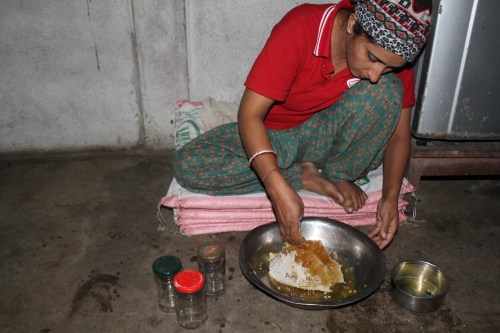
Once the hive was cleaned, we all gathered in the kitchen to help with the only part we knew how… Eating the honeycomb! We took turns using the waxy honeycomb to soak up the excess honey from the bottom of metal bowl. I popped some honeycomb in my mouth and the honey ran onto my tongue. WOW. It was unbeelieveable (sorry, I couldn’t resist)! After I’d sucked the honey, I spit out the wax which would later be used as a fire starter. Upon Tara’s recommendation, I also tired a piece of honeycomb with bee larva inside. He said it was good to eat. I think he meant it was safe to eat, because it was definitely not tasty. Maybe I would’ve enjoyed it more if I hadn’t known I was eating bee larva. Whatever the case, I now have a new strange food story to tell!

IMG_0606

Anjana preparing to squeeze the core of the hive, the part where most of the honey is stored

After we’d finished our “work,” Anjana cut out the center of the hive which was saturated with honey, yet contained no larva. It was pure gold. She squeezed the honey into a bowl before separating it into jars. It was enough honey to fill three and a half small jars. Two jars would be given to family and the other jar and a half would be kept as a remedy for when people suffered from colds.

By the time the honey harvest and celebration ended, it was well past 10:00pm. There were many sticky dishes and the upstairs balcony was the scene of a massacre with dozens of bee corpses scattered across the floor. However, the cleaning could wait til the next day. It had been an exciting night and we had managed to escape the wrath of the bees. Nevertheless, that night we all slept with our doors shut tightly and our blankets pulled over our heads. Honey bees are notorious for revenge.

Goals, Plans, & Lists

IMG_1096

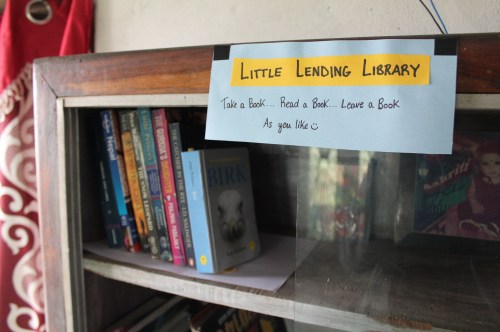
A neglected shelf at my homestay that I turned into a lending library. My organization impulse at its finest!

Anyone who know me well is familiar with my love of organization. For me, nothing is more satisfying than setting a goal, creating a list, and making a plan. And nothing is more rewarding than accomplishing that goal! Although, I admit that the goal is rarely accomplished according to plan. Take this gap year as the prime example: I wanted to travel abroad and planned to do so after graduating with my doctorate degree in physical therapy. Now here I am, traveling around Nepal instead of completing my first year of physical therapy school. Goal accomplished, but not quite as planned. And that’s okay! I’ve found that if you adhere too strictly to the plan, some incredible opportunities may pass you by.

Like every year, I have a few goals for 2018. Resolutions, as they say. “Resolution” suggests determination and potential, but not necessarily a plan. It’s just the end. However, I have a plan for each of my resolutions which I will write in a list, of course! Goals, plans, and lists… This is going to be fun!

Before I dive into what I’m going to do, it’s important to look back on what I have done. Here’s a little reflection on my 2017 resolutions:

Travel to a new country, learn a new language.

This one was a given. When I created it, I was well on my way to traveling to Nepal, just weeks from buying a plane ticket. I spent many long hours on my laptop figuring out what I was going to do for eight months in Nepal, a country I knew virtually nothing about aside from the fact that it had the iconic Himalayas. Once I made a decision (never an easy thing for me), I was busy booking flights, sending emails, and wrapping up life in the USA. I would soon find that planning from the comforts of my home was the easy part. In Nepal I would be exposed to new things and face challenges I’d never imagined (ie. the squatty potty). The language would come slowly and I would be frustrated at times. I would say difficult goodbyes and keep moving on. Above all, I would learn – and am learning – to find my way.

Get some use out of your GPS watch.

Every set of New Year’s resolutions needs a fitness goal, right? Mine was to track my daily workouts (be it running, biking, skiing, or swimming) on my new GPS watch, the big Christmas/birthday present. In the first month, I logged an activity everyday and kept vigilant watch of my steps. I grew quite attached to that watch. Too attached. So when it came time to do my thru-hike of the Superior Hiking Trail, I decided to ditch it. The first week I found myself checking my bare wrist, seeing only the ghost of a tan line from my watch. I had hoped that I wouldn’t care so much about the time during my hike; wake up, eat, and sleep whenever I felt like it. However trying to ignore the time was tough (society’s pressure to adhere to a timed schedule is strong). I was happily reunited with my watch at the trail’s end. During my trip to Nepal, I also left my GPS watch behind, replacing it with a $10 watch from Walmart. Best. Decision. Ever. I’ve never once worried about losing or damaging the watch. Plus, kids aren’t as attracted to it as they are the GPS watch. So my lesson for this resolution? GPS watches are amazing devices, but not recommended for travel. Also, time dictates my life.

Be intentional.

This one started out as “be intentionally nice,” but I was told by several friends that I was already too nice. So I dropped the “nice” part to make it simply “be intentional.” Much broader. I could still be intentionally nice, but I could also be intentionally firm or intentionally sincere. The thought behind it was to be more in control of my interactions. I asked myself, “how do you want to feel after this conversation?” Closure and certainty. I had the habit of shrugging my shoulders or giving vague answers when asked what I wanted. However, by being intentional, I could give the impression that I knew what I wanted (even if I didn’t have the slightest clue). I think they call that confidence. I wanted confidence. However, I didn’t realize that was my true goal was until coming to Nepal and building a little more confidence. As I said, goals are rarely accomplished according to plan. In this case, sometimes the goals themselves evolve into something you hadn’t expected. Something essentially beautiful.

IMG_1021

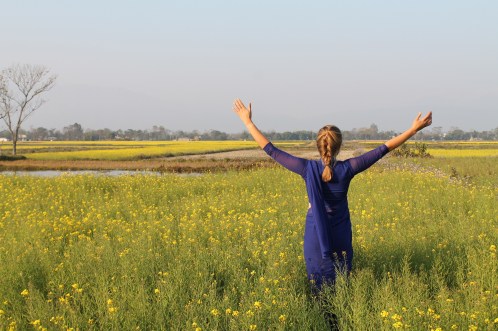
My big backyard in Chitwan

While I’m still working on my goals from 2017, it’s a new year! That means a new set of resolutions to tackle. I had a list of seven candidates, but narrowed it down to three:

Do a solo trip in the U.S.

My time in Nepal has made me realize how liberating it is to travel alone. I want more! Perhaps a solo backpacking trip on the Ice Age Trail. Maybe a mountain biking weekend in Duluth. Possibly some skiing in the Upper Peninsula. Don’t get me wrong, I love traveling with friends & family! Sharing moments with those close to you is priceless. However, solo traveling has allowed me to get to know myself. I’ve realized how much happiness I draw from others and how that happiness is extinguished with goodbye. I need to work on kindling happiness from within and the only way to do that is spending time with myself. Luckily, it turns out Laura Berry is a pretty nice person to spend time with! Although her inner ramblings are infinite. She never shuts up. Nevertheless, we get along quite well and I think we’ll be lifelong friends!

Continue on the path towards minimalism.

Another lesson from Nepal: You don’t need more than what you can carry on your back. Even that can seem like too much when I’m cramming into an over packed bus or van. I’ll probably have a bit more than a backpack when I settle back into my life as a student in La Crosse, but not much more. Stuff is stress. You have to clean it, maintain it, and eventually get rid of it when it breaks or becomes obsolete. I was never much of a materialist (I spent my senior year of college sleeping on a camp pad and using old wooden cranberry crates as shelving). However, I am nostalgic. I have scripts from elementary musicals, dozens of birthday cards, and maps from countries I may never step foot in again. Will I ever look at any of these things again? Unlikely. But will I ever get rid of them? There lies the challenge.

Stay in touch.

This is the big one. It’s a concrete goal and easy to plan (although harder to execute). I’ve met so many incredible people during this past year, people that have inspired me and challenged me. I want to keep them in my life even if we’re hundreds of miles away. I’ve already done fairly well keeping in touch with folks back home through emails and the occasional post of Facebook. However, my limiting communication factor is internet, not necessarily time. I’ve made my own schedule this past year. I decided where I will go, what I will do there, and when I will return. The only date set in stone is May 29, 2018, the day I start the physical therapy program at UW-La Crosse. All the time before that is mine to play with and explore! However, once in PT school, I will have a rigid schedule and a long to-do list. Communicating with people from another time and place in my life will be near the bottom of that list unless I intentionally put it near the top. I already have the momentum going, let’s see if I can keep it up!

A Nepali Christmas Carol

IMG_0448.JPG

Chickens roasting on an open fire
In the yard are buffaloes
Nepali folk songs being sung all the while
And women wrapped in sarees from head to toe

Everybody knows some fresh goat and some dhal bhat
Is the very best we’ve got
Nosy neighbors, Hindi pop blasting full
We’ll find it hard to sleep tonight

You know tomorrow is a busy day
We’ve got to cut the grass, weed the beds, and bale hay
And every mother’s child is going to spy
To see how much honey comes from the wild hive

And so I’m offering this simple phrase
In cities from New York to Kathmandu
I’m not sure it’s been said in quite this way, but
Merry Christmas from Nepal to You!

A Very Nepali Birthday

Processed with VSCO with p5 preset

This is what turning 23-years-old in Nepal looks like

I wasn’t planning on celebrating my birthday this year. I thought I’d just buy myself some peanut butter & apples, video chat a few friends, and call it a day. Twenty-three isn’t a huge milestone, and besides, I’m in Nepal! What more could I want? I don’t need presents (I can’t fit much more in my backpack anyways). What more could I wish for? I’m already living an adventure.

Yet, when my host family found out I had a birthday coming up, they immediately started planning the celebration. They told me that we needed to have cake, presents, and dancing. I told them presents and dancing weren’t necessary, but I never turn down birthday cake. Akriti (my 13-year-old host sister) would be in charge of the cake. She told me I would need to find vanilla, chocolate chips, and Nutella. She would take care of the rest.

The whole family was excited to celebrate my birthday, but Ananta (my 8-year-old host brother) was the most excited of all. He was mostly excited for the cake, but I felt honored, nevertheless. The week leading up to my birthday, he was on the countdown. “Three days until your birthday… Two days… One!”

And then it was December 21st, my twenty-third birthday.

I woke up at 5:30am, too excited to sleep. I love celebrating birthdays and hope I never become one of those people who believe it’s “just another day.” I quietly made my way down to the kitchen with my headlamp and made myself a big thermos of black tea, unsweetened. I went back up to my room with my piping hot tea in hand. I pulled out a big jar of peanut butter that I’d bought in Bharatpur the day before when I was getting supplies for my cake. I sat in the dark drinking tea and eating apples with peanut butter as the sky outside turned from night to dawn. When there was enough light, I laced up the knock-off Adidas I bought in Kathmandu and went running through the fields of Chitwan.

If my birthday had ended there, that would’ve been enough. But the day was only beginning.

After I got done with my routine freezing cold morning shower, I went to the kitchen to prepare black masala tea for the family and other volunteers. I love making masala tea. Not only do I love the end result, but I enjoy the process. There’s something therapeutic about it: grinding the spices, throwing the tea in, and watching the boiling water turn from clear to rich brown.

This morning as I was making the tea, Akriti came in with a smile and something behind her back… A birthday present! It was small, just a few hair clips and a hand-written note. I was touched. A few minutes later, Ananta came in and gave me his present and a drawing (he was not going to get shown-up by Akriti). In a plastic box were a small bear figurine, a pom-pom, and some WWE wrestling stickers. Just what I wanted!

I brought my tea upstairs for the second time that day and got on my laptop for a video call with some close friends back home. Though we’ve been staying in touch via email, I hadn’t seen their faces in over three months. It was a fantastic reunion and I couldn’t stop smiling! We might have talked all day (or all night for them), but there were things to be done on the farm, birthday or not.

IMG_0545

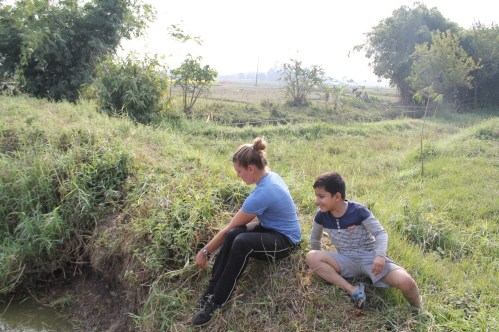
Cleaning the fish pond with Ananta “helping”

The task of the day was cutting grass around the fish pond, one of my favorite chores! We had worked on the pond three other days and had about a third of the perimeter to go. The three other volunteers and I grabbed some sickles (hook-shaped knives used for cutting grass) and headed out to the pond. Three of us worked in the water cutting the dense aquatic reeds and the last person worked on the bank hauling up the piles of reeds. It was about 75 degrees and the sun was warm on our backs. It felt nice to be knee-deep in the cool water, despite the occasional fish brushing against my leg.

After about three hours of work, we had finished the perimeter of the pond. We rinsed off the pond scum and laid out in the sun to dry. Anjana appeared with afternoon tea along with a birthday surprise… Crepes with lemon & honey! We sat on the front porch for the rest of the afternoon, relaxing and admiring the clean banks of the fish pond.

When Tara & the kids returned home from school, preparation for my birthday celebration began. Tara went out to the pond to collect some fish for my birthday dinner. Although I’ve been here for nearly two weeks, this was the first time we would be having fish. I was honored! Akriti and another volunteer got to work on the cake. It would be baked over a fire in the family’s new brick oven. The baking process is a little different than the electric ovens we have in the U.S. I was both intrigued and excited for my brick-oven wood-fired birthday cake!

IMG_0567

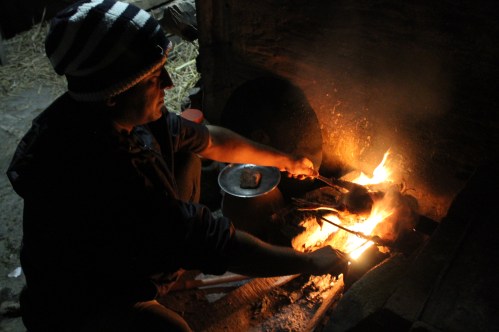
Anjana heating up the brick oven

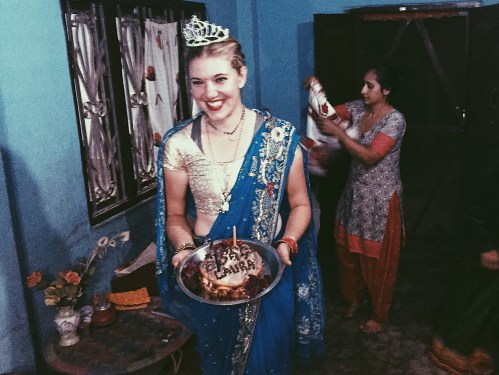
After the cake was underway, Akriti grabbed my hand and took me to get dressed up… in a traditional Nepali saree! It was the whole nine yards: the vest, skirt, long beautiful cloth, bangles, and bindi (forhead jewel). Of course, Akriti had to do my hair and make-up as well (one of her favorite activities it seems). When I looked in the mirror after about an hour of beautification, I was in awe. The woman staring back had gold eye shadow, dark eyeliner, and bright red lipstick. Her hair was pulled back into french braids, and she wore a stunning blue and gold saree. It wasn’t Laura Berry in the mirror. I was Laksmi Adhikari.

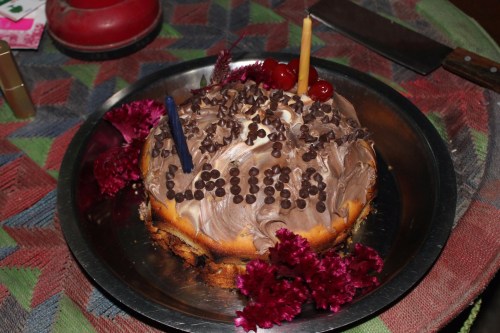
Dinner was a feast! Of course, we had heaps of dahl bhat, but to accompany it we had relish, turnips, cucumber, and whole fried fish. Yes, I ate the fish head. And dessert? Brick-oven wood-fired birthday cake! It was frosted with Nutella and decorated with flowers. On top, they had painstakingly written “HAPPY BDAY LAURA” with mini chocolate chips. Happy Birthday was sung, the cake was cut, and served on recycled scratch paper. The cake both met and exceeded my expectations! There were no leftovers.

IMG_0578.JPG

My brick-oven wood-fired birthday cake!

Then came the dancing. At first it was just me, dancing in front of the family and other volunteers. This was nothing new, of course. I’ve found myself dancing alone to Nepali songs in front of a crowd quite a few times. It’s becoming the norm. Soon other volunteers started to join in, and by the end, everyone was packed into a small room showing off their best Nepali dance moves. Anjana and Akriti were clearly the best dancers of the group, but I’m starting to get the hang of Nepali dancing.

Around 9:30pm, we decided to call it a night. Just before I went to bed, Tara appeared at my door with one last bite of cake. He told me it was tradition that he feed me the last bite. I laughed and obliged, despite having already brushed my teeth. After he left, I lay in bed, replaying the events of the day. It had been an incredible birthday. I did everything from work in a fish pond to dance to Nepali pop wearing a saree.

I wonder what future birthdays will hold…